
Family Discipleship at Home: 5 Simple Rhythms for Busy Parents
Family discipleship at home can sound like one more program for already-busy parents to manage. You may picture a flawless devotional at the kitchen table, with attentive children and thoughtful answers every night. Or, a well-organized hour-long church service at home. Most families do not live that way. My family definitely doesn’t. We are a family of six, with kids aged 3 to 10, so our house is hardly calm and silent!
The good news is that helping children follow Jesus does not require a perfect schedule or a seminary degree. It begins with opening God’s Word, talking honestly, praying in response, and returning to those practices when life gets messy.
If you are wondering how to disciple your child, start smaller than you think. This guide offers five family discipleship rhythms you can adapt to your child’s age and your family’s actual life.
What is family discipleship at home?
Family discipleship at home is the ongoing work of helping children know Jesus, understand Scripture, respond to God in faith, and learn to live as his disciples. Parents are not the Holy Spirit, and we cannot manufacture spiritual growth. We can, however, make intentional room for God’s Word in ordinary life and model what it looks like to follow Christ with humility.
Deuteronomy 6:4–9 locates the teaching of God’s words in the everyday movements of a household: sitting, walking, lying down, and getting up. That is not a command to turn every moment into a lesson. It is a vision of faith woven into life. I have reflected more fully on that passage in Deuteronomy 6: How Should We Lead the Next Generation?
A healthy family discipleship at home plan is therefore less like a checklist and more like a set of repeatable practices. These five rhythms give you a place to begin.
1. Read a small portion of Scripture together
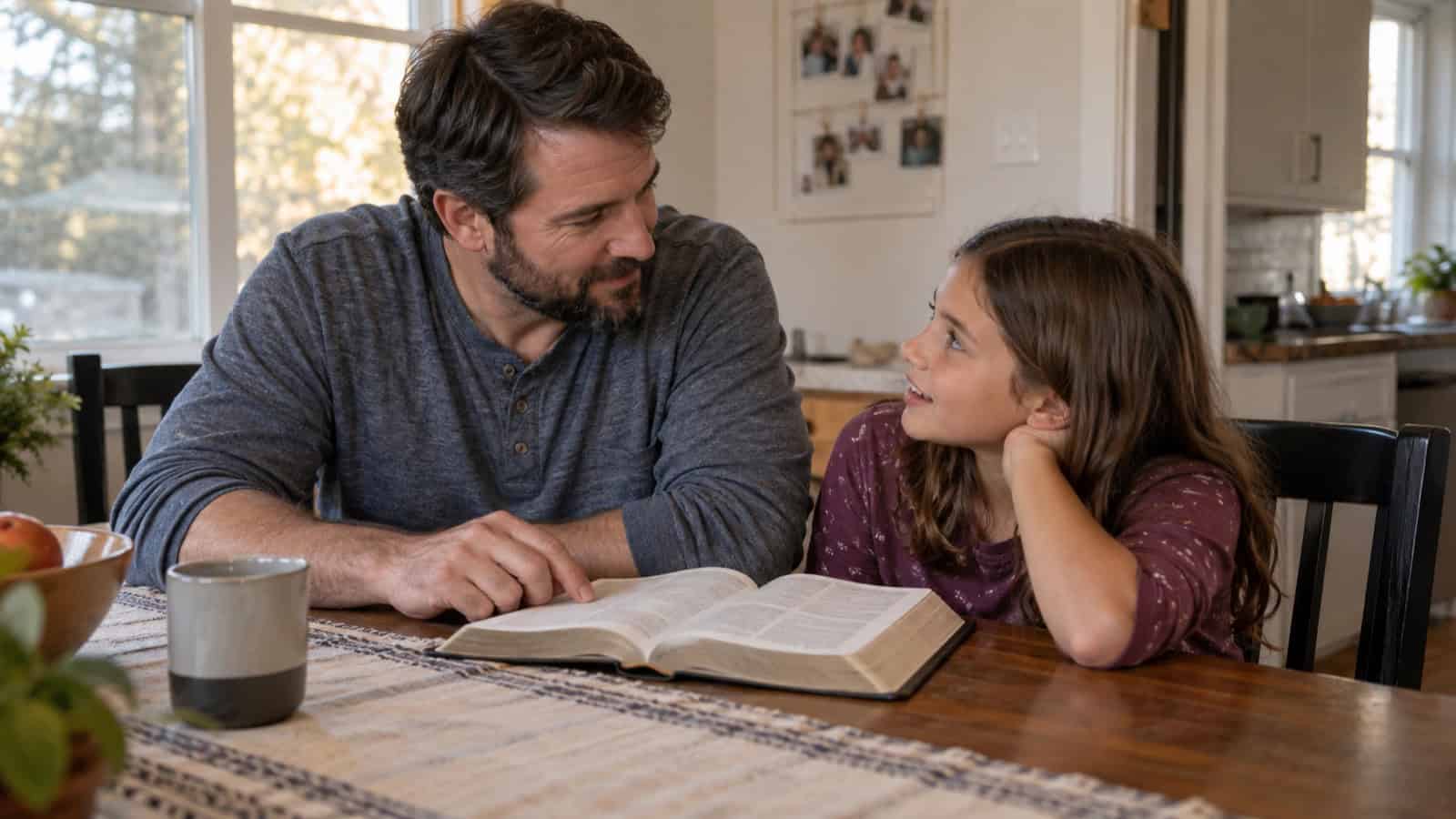
Choose a passage short enough that you can read it slowly. A few verses from a Gospel, a psalm, or the passage your church is studying may be enough. Read it aloud, then ask, “What do we learn about God?” and “What do we notice about people?” As children grow, add, “How might we respond?” You do not need to explain every difficult verse before the conversation can be worthwhile.
For younger children, a storybook Bible can help them see the larger story of Scripture. As they are ready, open a complete Bible alongside it so they also become familiar with the actual books, chapters, and words of the Bible. My guide to choosing a Bible for your child explains how to make that transition by age, reading level, and need.
Try this week: Read Mark 10:13–16 together. Ask what Jesus does when children are brought to him. Let each child share one thing they noticed.
2. Pray about what you read and what your family is facing
Prayer can grow naturally from Scripture and from the concerns already present in your home. Thank God for something the passage reveals about his character. Ask for help practicing what you learned. Bring a friendship conflict, an anxious thought, a sick neighbor, or a difficult decision before him. This models prayer as a real response to God, not merely a line to recite when the reading is finished.
Children may pray aloud, listen, draw a prayer, or name a concern for a parent to pray about. Do not force a performance. Let them see you ask God for wisdom and admit when you need grace. Family discipleship at home includes parents learning to follow Jesus in front of their children.
3. Continue the conversation in ordinary moments
Some of the best conversations happen after the Bible is closed. A child asks a question in the car. A teenager raises a concern while you are doing dishes. A walk gives you room to talk about a friendship, a choice, or something your church discussed on Sunday. Listen before you answer. Ask what they think and why. When you do not know, say so and look for an answer together.

In family discipleship at home, these conversations are not interruptions to the “real” discipleship time. They are often where children begin connecting biblical truth to actual life. You can return to a passage you read earlier or simply ask, “What do you think following Jesus might look like here?”
4. Practice worship, repentance, and service together
Discipleship is more than transferring information. Sing together as a family with your church family. Help a neighbor. Forgive one another. When you sin against your child, apologize specifically and ask forgiveness. When someone is hurting, consider how your family can show care. These practices do not earn God’s favor. They give children a lived picture of how the gospel reshapes relationships.
Choose one simple act of service that fits your family’s capacity. It might be taking a meal to the widow at church, writing an encouraging note to a friend at school, or checking on a neighbor. Afterward, talk about why Christians serve. The goal is not to create impressive children, but to help them notice and love people as Jesus does.
5. Lean on your church for support and encouragement
Parents have a distinctive role in discipling their children, but they were never meant to carry it alone. The church offers worship, teaching, relationships, and older believers who can encourage children and families as they grow. That support may not arrive through a ready-made program, so it is worth reaching out.
Tell a pastor or children’s or student ministry leader where your child is asking questions and where you feel unsure. Ask them to pray with your family, recommend a passage or resource, or help you think through how to respond to a specific situation. Share what you are already trying at home. That gives leaders a chance to encourage and guide you without assuming that one more church event is what you need.
Connect with another family at church, too. Share a meal, talk honestly about the joys and difficulties of following Jesus with children, and pray for one another. A parent further along may offer perspective, while a family in a similar season may simply remind you that you are not alone. These relationships do not replace a parent’s role in the home. They help us live it within the wider body of Christ.
In my conversations with family pastors, I have heard a recurring concern: parents need more than another event to attend. They need encouragement, useful resources, and relationships that help them grow in confidence. I write about ways churches can cultivate this partnership in 3 Ways Family Pastors Are Trying to Equip Parents. If you serve in ministry, the broader Family Pastor guide explores this calling further.
A simple 7-day plan for family discipleship at home
If your family has no established rhythm, do not begin with an ambitious daily schedule. Try this modest first week, then keep what is helpful:
- Day 1: Choose a regular moment, such as after dinner or before bed, and tell your children why you want to read together.
- Day 2: Read a short Gospel passage and ask what it shows you about Jesus.
- Day 3: Pray about one thing you learned and one real concern in your family’s life.
- Day 4: Revisit the passage during a walk, a drive, or a meal. Invite questions.
- Day 5: Practice one small act of kindness or service together.
- Day 6: Read again, even if the week did not go as planned. Consistency grows through returning, not through perfection.
- Day 7: Worship with your church and ask your child what stood out. Connect with another family or leader and share one way they can pray for you.
This is a starting point, not a spiritual scorecard. Two thoughtful conversations may serve your family better than seven hurried ones. If this sample 7-day plan feels too daunting, choose one or two rhythms and build from there. Or start by establishing a simple bedtime routine of praying with each child. Regularly having small, intentional spiritual moments with your kids can build a foundation to work with.
How should the rhythm change as children grow?
Infants to 6 years old: Keep readings short, repeat favorite stories, and welcome movement and questions. A child may understand more than they can explain.
7 to 12 years old: Let children find a passage, read a few verses aloud, and ask their own questions. Show them how to use a table of contents and locate a book of the Bible.
13 to 18 years old: Make more room for honest discussion and increasing ownership. Invite teenagers to name what troubles or interests them, and resist the urge to turn every question into a lecture. They need a parent who will listen as well as teach or offer advice. Be transparent about your own struggles.
These ages are guides, not rigid stages. Reading ability, disability, temperament, and spiritual questions all matter. Adapt the format to the child God has placed in your care.
Frequently asked questions about family discipleship
What if we miss several days?
Begin again without apology or a dramatic reset. Missing a week does not disqualify you. Pick up the passage you were reading, or start a new one. Let your children see that returning to God’s Word is a normal part of Christian life.
What if my child is not interested?
Pay attention to why. The timing may be poor, the reading may be too long, or a child may need more space to ask honest questions. Invite participation without making every conversation a test. Keep showing patient interest in your child and a sincere love for Christ. Something will stick, and if it sticks, keep working with that!
Can one parent do this alone?
Yes. A single parent or the only believing parent can read, pray, and talk with a child in ordinary ways. Seek encouragement from trusted believers in your church. The invitation to disciple a child is not limited to households with two parents or an ideal schedule. It is simply intentional, faithful moments.
Start with the next faithful moment.
Family discipleship at home does not depend on getting every detail right. Read a passage. Listen to your child. Pray about what you learned and where you need God’s help. Lean on your church for prayer, wisdom, and the companionship of other families. Then return tomorrow, or the next day, and do it again. The hope is not simply that our children know more about the Bible, but that, through the power of the Holy Spirit, they come to know and love the God who speaks through it. God’s Word will not return void or empty (Isaiah 55:11).