
How to Choose the Best Bible for Your Child: A Guide by Age, Reading Level, and Need
Choosing the best Bibles for kids can feel more complicated than it should. A shelf full of bright covers does not answer the questions parents actually ask: Will my child understand it? Is it a storybook or a complete Bible? Will it help us talk about Scripture together? And what happens if reading is difficult?
A good answer starts with the child, not the cover. Age matters, but so do reading confidence, attention, curiosity, and particular needs. The goal is not to find the one perfect Bible. The best Bibles for kids are the ones a family can keep opening together.
Some links in this article are Amazon Associate links. If you make a qualifying purchase through one, I may earn a commission at no additional cost to you. As an Amazon Associate I earn from qualifying purchases.
How to choose the best Bibles for kids: start with the child
A Bible should meet a child where he or she is while still inviting that child to grow. Young children are often drawn in through story, repetition, pictures, and the safety of shared reading. Elementary-aged children begin to connect biblical stories to relationships, choices, and questions of right and wrong. Students need room to ask honest questions as they form convictions and learn to see their lives within God’s larger story.
That is why the first question is not, “Which Bible is best?” It is, “What kind of reader and learner is my child right now?” A six-year-old who loves being read to may thrive with a rich storybook Bible. Another six-year-old who is beginning to read independently may be ready for a complete Bible with helpful features. A teenager may need a Bible that takes their questions seriously without trying to give a quick answer to every one of them.
Storybook Bible or complete Bible?
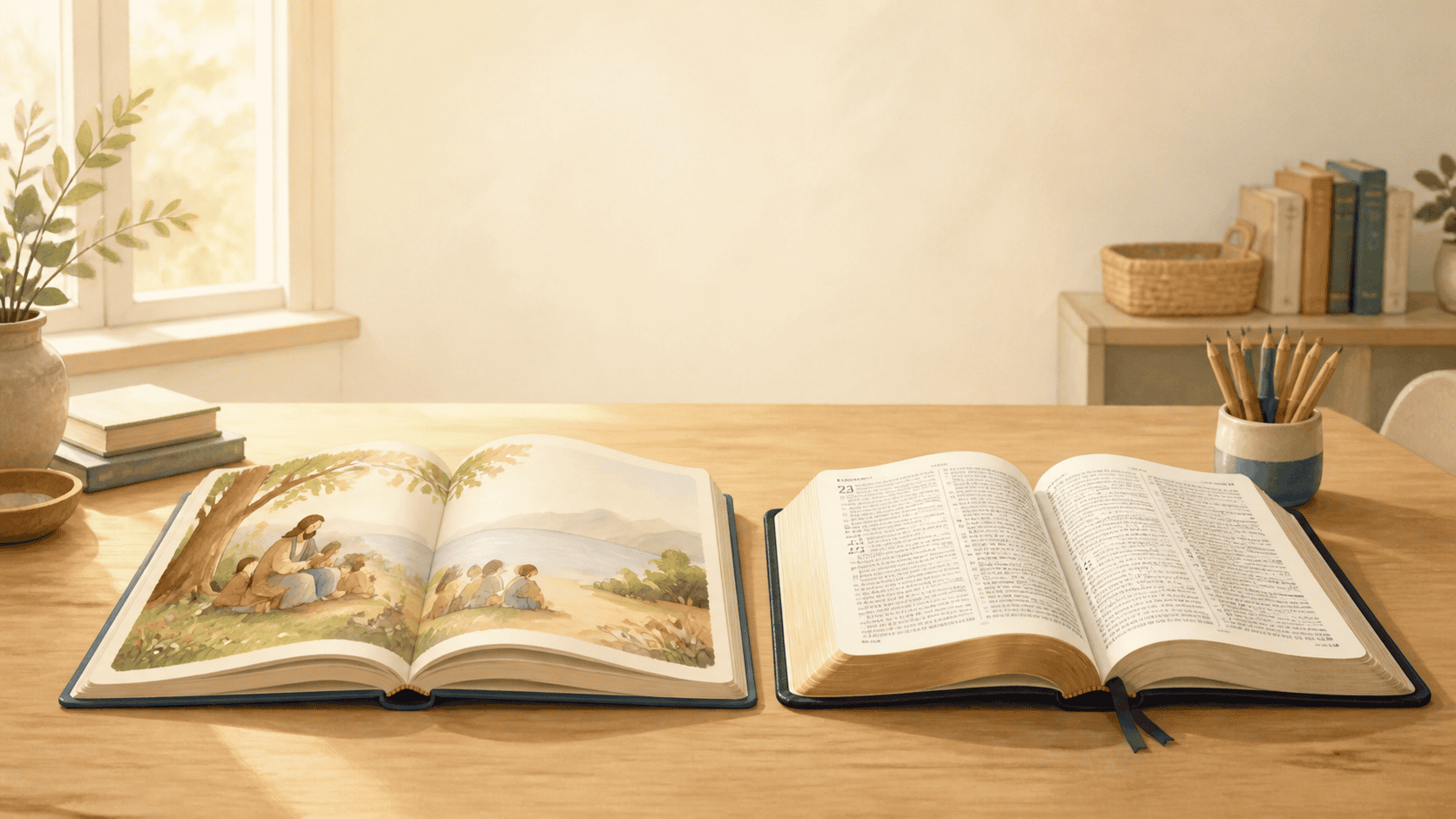
This is the distinction I most want parents to understand. A storybook Bible can be a wonderful early on-ramp to Scripture. It helps children see that the Bible is not a collection of disconnected moral lessons, but one unfolding story that leads to Jesus. But a storybook Bible is not the same thing as a complete Bible. For many families, the best Bibles for kids include a storybook Bible alongside the full text of Scripture.
As children grow, many families benefit from using both. Read the storybook Bible together, then begin opening a complete Bible alongside it. Let them hear the larger story, but also learn that the actual words, books, chapters, and verses of Scripture are accessible to them. The transition does not need to happen in one dramatic moment. It can happen naturally, one passage at a time.
Ages 2 to 6: Begin with story, repetition, and shared reading
For preschoolers and early readers, the best Bible is usually one that makes reading together a joy. Look for clear storytelling, beautiful illustrations, and language that helps children recognize God’s faithfulness across the whole Bible. At this stage, it is less about independent reading and more about building familiar rhythms: a few minutes after dinner, a favorite story before bed, or a simple question in the car.
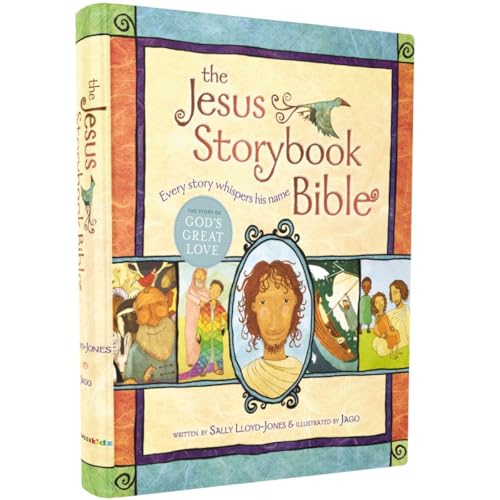
The Jesus Storybook Bible: Every Story Whispers His Name has served many families well because it consistently points beyond the individual stories to Jesus. Its language is rich enough to reward slow, shared reading, so I would especially recommend it as a parent-and-child book rather than expecting a young child to read it alone.
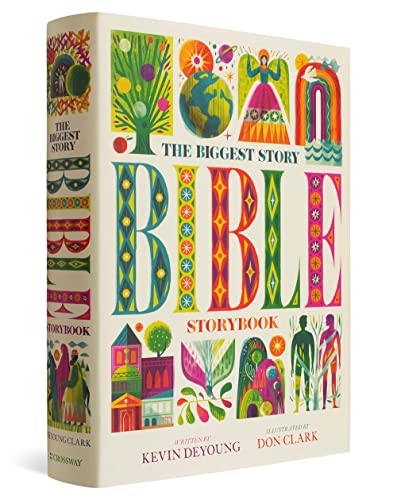
Another strong option is The Biggest Story Bible Storybook. Its strength is helping children see how the Bible’s many stories fit within one big story of creation, fall, redemption, and restoration. Choose the one that you will actually open consistently. A well-loved Bible that is read often is more useful than a beautiful one that stays on a shelf.
Ages 6 to 10: Help developing readers navigate real Scripture
As children gain reading confidence, introduce a complete Bible in a format they can carry, open, and begin to navigate for themselves. Look for readable type, sensible helps, and a translation your family can understand together. Maps, illustrations, reading plans, and brief explanations can support interest, but they should serve the biblical text rather than replace it. The best Bibles for kids at this stage help young readers return to the text with growing confidence.
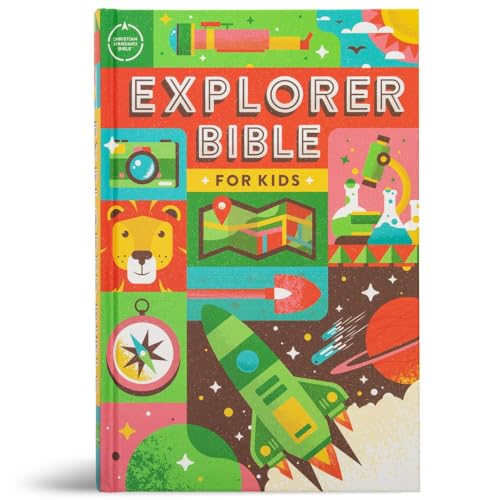
The CSB Explorer Bible for Kids is a helpful next step for many developing readers. It is a complete Bible with features that help children make connections as they read. Use it as an opportunity to teach practical habits: finding the table of contents, turning to a passage, noticing headings, and asking, “What does this show us about God?”
Accessible Bibles: reading barriers should not keep a child from Scripture
Some children need a Bible designed with accessibility in mind. Large, readable type, thoughtful page design, and visual supports can lower unnecessary barriers and help a child stay engaged. That is not a lesser option. It is a wise way to honor the particular child God has entrusted to you. Among the best Bibles for kids, readability is a genuine ministry consideration.
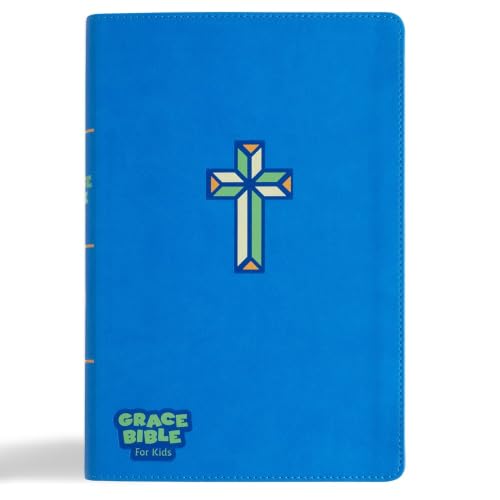
The CSB Grace Bible for Kids is one option worth considering for children who benefit from an especially readable format. I bought a copy for a child at church who found it easier to read and loved its typeface. Every child’s needs are different, so it is wise to look at sample pages when possible and choose the format that gives your child the best opportunity to read with confidence.
Middle school and high school: make room for questions and ownership
Students are growing in their ability to think abstractly, evaluate what they believe, and ask how Scripture speaks to identity, friendships, suffering, sexuality, vocation, and the world around them. A teen Bible can be useful when its notes and articles invite deeper study without becoming a substitute for conversation in the home and church.
Give students increasing ownership. Let them choose a cover they will carry. Help them find a reading plan they can sustain. Ask what they are noticing and what feels difficult. The aim is not to hand them every answer. It is to help them build the habits and confidence to return to God’s Word with real questions.
I keep several options for teen and student Bibles on my Recommended Resources page. The right choice will depend on reading level, translation preference, and the kind of help a student will actually use.
A simple checklist before you buy
- Does this Bible fit my child’s current reading ability?
- Is it a storybook Bible, a complete Bible, or a thoughtful combination of both?
- Does it help my child see the Bible’s big story rather than only isolated lessons?
- Is the type, layout, and physical size comfortable for my child to use?
- Will it give us natural opportunities to read and talk together?
- What small rhythm will help this Bible become a used Bible rather than a shelf Bible?
What matters most
A Bible is not a magic object, and buying the right one does not create a family discipleship culture by itself. The best Bibles for kids become valuable as families open them together over time. Formation happens as children repeatedly encounter God’s Word in the context of love, questions, prayer, repentance, and ordinary life. Read a short passage. Ask one simple question. Reread a favorite story. Pray together about the principles you have learned, asking God for help and understanding as you apply his Word in the life you share. Keep going.
The long-term hope is not simply that our children would own a Bible. It is that, by God’s grace, they would come to love the God who speaks through it, learn to return to his Word for themselves, and see their lives transformed by his Word through the power of the Holy Spirit.
For more practical help, you may also find these articles useful: Deuteronomy 6 Reflections: How Should We Lead the Next Generation? and 3 Ways Family Pastors Are Trying to Equip Parents.