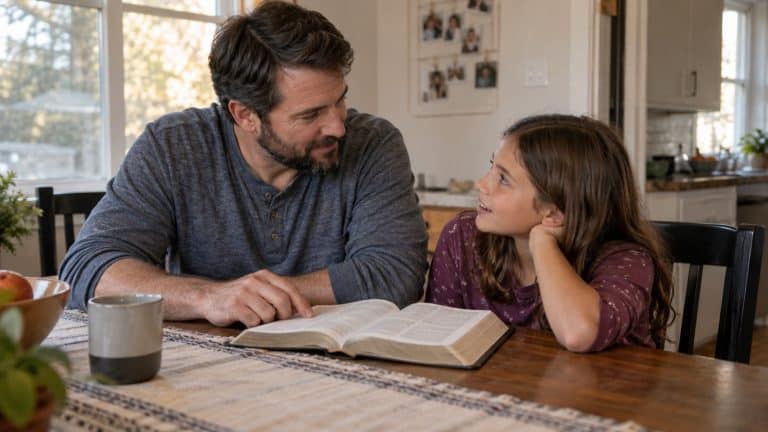

4 Lessons on Caregiving and Hospitality from Watching My Parents
Caregiving and hospitality are some of the clearest ways our faith is lived out in everyday life.
“Religion that is pure and undefiled before God the Father is this: to visit orphans and widows in their affliction, and to keep oneself unstained from the world. – James 1:27
Scripture reminds us that genuine faith is not only expressed in what we believe or know, but in how we conduct ourselves in everyday life. I’ve read James’s letter many times, and each time I read it, I keep reflecting on different aspects. There is a recurring balance throughout the letter between the trials of the Christian life and humility in various circumstances. Something I’ve been asking myself lately is, “What does it look like for me to be both a ‘hearer’ and a ‘doer’ of the Word, not just one without the other?” (James 1:23-24).
James spelled out, in clear words, one example of hearing and doing: ” visiting orphans and widows in their distress/affliction” (James 1:27). As I have reflected more closely on this verse, I have been intrigued by the word “visit.” What does that really mean? As a pastor, I do visits all of the time: hospitals, homes, and counseling sessions in my office. Is this all that it means?
I am not a Greek scholar. I have studied just enough Greek in seminary to be dangerous. So, I thought I’d look at what some scholars say about visiting orphans and widows in this context to gain some new insights. I discovered that the Greek word episkeptomai (ἐπισκέπτομαι) can mean both “visit” and “look after” or “care for.”1
Affiliate disclosure: Some links in this post are Amazon Associate links. If you make a qualifying purchase through one, I may earn a commission at no additional cost to you. As an Amazon Associate I earn from qualifying purchases.
Bloomberg and Kamell noted:
“Visit” (ἐπισκέπτεσθαι) implies not only going to see these people but also caring for them. Orphans and widows, lacking fathers and husbands, respectively, formed two paradigms of the needy and dispossessed in patriarchal societies. The OT consistently refers to God’s concern for this group, as seen especially in Dt 10:18; 24:19; Ps 146:9; Jer 7:6; and Zec 7:10. God often promises to judge his people based on how well they care for the husbandless and fatherless.2
When I pondered this passage in James and thought about visiting and caring for others, I was reminded of the caregiving efforts I observed when growing up. One of the clearest ways I learned about caregiving did not come from a sermon or a classroom; it came from watching my parents live it throughout my life.
Caregiving and Hospitality on Display
I grew up as a pastor’s kid. My dad was, and still is, a bi-vocational pastor, so he also had a separate full-time job. My mom also worked full-time. They were also trying to raise my brother and me. For my parents, life was already full.
Yet throughout my childhood, our home often became a place of refuge for others, mostly family members, but also people in the community who were in a tough spot.
My grandmother, who had been widowed twice, either lived with us or next door to us my entire childhood. She was like a second mom to me. She also modeled caregiving well. Her first husband was also a bi-vocational pastor. When he suffered a massive, life-altering stroke, she cared for him, day and night. There were definitely challenges for her. He was not easy to care for, to put it kindly. The stroke affected his mobility and also his mood. Yet, she was faithful, in sickness and in health, to care for him.
I do not remember my grandmother’s health ever being great, but I remember the countless memories we shared together. She was not an extended family member that we occasionally visited; she was part of our immediate family and our everyday lives. She helped care for us, and we had the privilege of caring for her. She passed away more than a decade ago, but the impact she had on my life remains. She modeled humble caregiving for my family, and my parents followed her example, modeling it to me.
There were other seasons of caregiving for my parents, too.
My dad’s stepfather lived with us for a time when he had nowhere else to go. He was widowed after my grandmother passed away during her cancer treatment. A few years later, he endured a painful and unwanted divorce. My dad and his stepfather’s relationship had its challenges, but when my step-grandfather found himself alone, distraught, and struggling financially, my parents opened their home so he could get back on his feet. They didn’t have to care for him. He chose to start a new life with a new family. My parents had no obligation, but they had Christ-like compassion for him.
During another season, my aunt and my cousins lived with us. My aunt was raising three kids by herself at that time and going through a very challenging situation. She needed help and a safe place to land for her and the kids. Our home became that safe place. Even after we all grew up and moved out, my aunt briefly lived with my parents two additional times when she had serious health issues.
These were just a few examples of how my parents lived out James 1:27 with our own family members. They did more than visit widows and orphans; they became a safe haven for them and shepherded them. They did this for other people in our church and the community as well, too many to remember. Our home was a safe place, filled with gospel compassion for the hurting and the down-and-outs.
Additionally, my wife, who also grew up as a pastor’s kid (and pastor’s grandkid), saw firsthand how her grandmother selflessly cared for her grandfather, who struggled with dementia for a decade before he went home to be with the Lord. We have both seen how the Lord has used our parents and grandparents through a ministry of faithfully caring for others, even when it’s hard or inconvenient.
Looking back, I realize something important: my parents did not treat caregiving as an inconvenience. For them, caregiving was simply part of following and imitating Christ.
Of course, it was not always easy. There were stressful moments, challenges, and frequent misunderstandings/communication issues that all kids notice, even if they don’t fully understand each situation. Caring for people rarely fits neatly into our existing schedules or budgets.
But what I remember most was my parents’ compassion and humility. They did not see people as burdens to carry. They saw people as fellow image-bearers, people whom Christ loves and died for.
Children notice those things. My brother and I sure did.
Long before children understand theological concepts like service, sacrifice, or loving your neighbor, they watch how their parents and grandparents treat people. Our parental actions shape a child’s understanding of what faith looks like in real, everyday life.
Looking back now, I realize my parents were teaching me far more than they probably realized.

4 Theological Lessons That Have Stuck With Me
1. Let Your Faith Be Seen, Not Just Said
My parents did not sit me down and give me a lesson on compassion. They showed it to me.
They opened their home. They made space. They stayed present when things were difficult. Over time, I began to understand something simple but important: following Jesus shows up in how we treat people.
If you want your children to understand what faith looks like, let them see it.
Let them see you care for someone who is struggling. Let them hear you pray for others. Let them watch you choose people over convenience.
Children rarely remember our explanations, but they remember what we model. They remember how we live out our faith in ordinary life.
2. Make Room in Your Life, Not Just Your Schedule
Looking back, I realize my parents did not wait until life slowed down to help others. They made room in the middle of a full life. That is what made it meaningful.
Caregiving did not happen when it was easy. It happened when it was inconvenient, when space was tight, and when energy was limited.
If we are honest, there will never be a perfect time to step into someone else’s need. We will always have something going on in our own lives; we have to make time.
So start small. Maybe it’s to invite someone into your home, check in on a neighbor, or offer to help a family in a difficult season. You do not have to solve every problem. You only need to be available and willing to show up.
3. Involve Your Kids in the Process
One of the biggest reasons why my parents’ examples of hospitality and caregiving have stuck with me is that I was part of so many important moments.
I was not removed from what was happening. I saw it up close. I saw the tears, fears, and hurt that those around us experienced. I wasn’t involved in every conversation, but I was close enough to notice when things weren’t going well for others, and I watched my parents help whenever and however they could. I observed so many people in our living room over the years being prayed for; I was even part of some of those moments, huddled together praying for God’s protection and direction.
Parents sometimes try to shield their kids from hard situations, but there is something formative about letting them see real-life ministry. I’m not saying don’t exercise caution. We are still ultimately responsible for our children’s safety and should not put our families in dangerous situations. Discuss life-changing moments with your spouse, and lean on the Holy Spirit when you are not sure.
Talk with your kids about why you are helping someone. Let them participate in simple ways. Help them understand that caring for others is part of following Jesus.
This is where discipleship becomes lived, not just taught. In many ways, this reflects the biblical pattern of teaching and modeling faith in everyday life, not just structured teaching moments.
4. Trust That God Is Forming Something Deeper
At the time, I did not fully understand what God was doing through those seasons. It just felt like normal life.
Now I can see that God was forming something in each one of us.
He was shaping my parents’ hearts through sacrifice and dependence on Him. He was also shaping my brother’s and my understanding of what it means to follow Christ.
Caregiving will stretch you. It will expose your limits. It will require patience and grace.
But it will also help make you see people through Jesus’ eyes. I am definitely not perfect. There are moments when I’m not so hospitable, my patience wears thin, and my family definitely notices.
But God frequently reminds me of those moments from my childhood, reminding me that my kids are also watching how I treat people. They listen to the conversations I have and to the prayers that my spouse and I offer on behalf of others. They pay attention to how we treat their grandparents. So, do not overlook those moments. God is using them not only to bless others but also to form you and your kids.
Final Encouragement
If someone has been on your or your spouse’s mind lately, it’s possible that God might be calling you into a season of caregiving for an elderly parent or a family in need of a safe place for a while. Talk it over together with your spouse. Pray that the Lord will give you some discernment on how He may want to use your family to care well for them. If you have reached a point of clarity, talk about it with your kids.
Caregiving is not always about inviting someone to live with you. The Lord may not be calling you to that, but He may be prompting you toward simple acts of compassion and hospitality. Make a meal. Offer a ride. Sit and listen. These ordinary moments of care often shape your family more than you realize, forming a lasting legacy of love and faithfulness. I know it’s made a difference in my life.
- Mark L. Strauss and Tremper Longman III, eds., “Care For,” in The Baker Expository Dictionary of Biblical Words (Grand Rapids, MI: Baker Books: A Division of Baker Publishing Group, 2023), 141. ↩︎
- Craig L. Blomberg and Mariam J. Kamell, James, Vol. 16, Zondervan Exegetical Commentary on the New Testament (Grand Rapids, MI: Zondervan, 2008), 94–95. ↩︎