
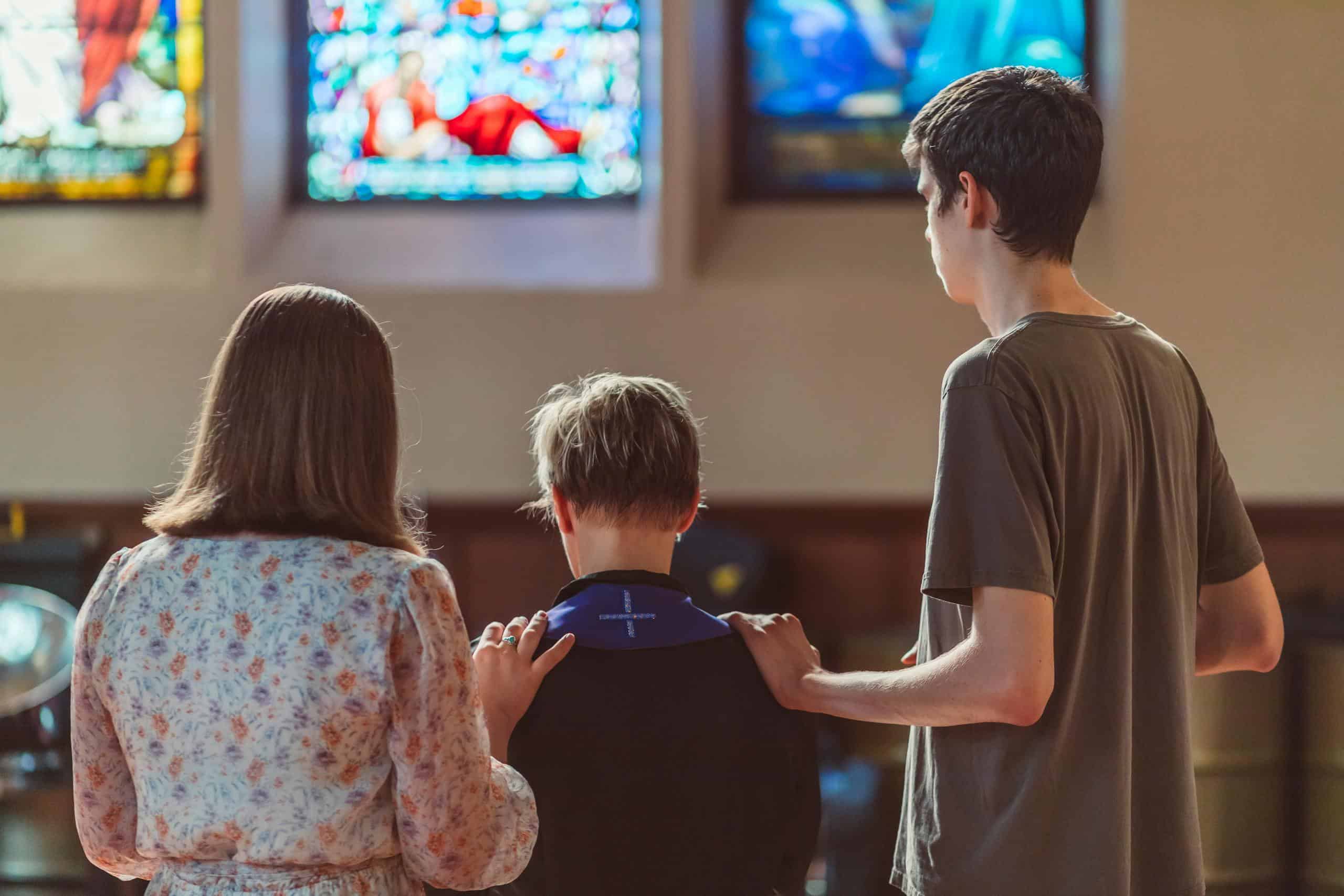
Family Pastors as Intergenerational Unifiers: A Pastoral Identity for Generational Unity
One of the most encouraging patterns I discovered in my research on family pastors is their commitment to building unity across generations.1 Over and over again, family pastors described the importance of creating relational opportunities where children, students, parents, and older adults could share life together. They recognized that discipleship weakens when every ministry operates independently. Strong discipleship grows when generations walk together.
As a kids pastor, I see the value of this in my own context. And as someone who has spent years studying family pastors, I have come to believe that one of their most important pastoral identities is building bridges between generational gaps
All pastors, including family pastors, should be Shepherd-Equippers, Entrusting Endurers, Intergenerational Unifiers, and Mentored Disciple-Makers.
Explore the complete guide to the four biblical identities of a family pastor.
Today, let’s dive into the third pastoral identity:
Family Pastors as Intergenerational Unifiers.
Family pastors help the church recover the biblical rhythm of generations learning from, supporting, and encouraging one another. They cultivate the kind of connection that Scripture describes repeatedly and that many churches today often overlook.
A Biblical Foundation for Generational Unity
Both the Old and New Testaments present spiritual formation as an intergenerational calling. It is not just a task for parents. It is the responsibility of the entire community of faith. Below are just a few examples from Scripture.
Old Testament
One of he most cited Scripture passages that supports the theology of family discipleship and intergenerational unity is Deuteronomy 6:4-9. The context of this passage explains how Moses was preparing the present and future generations to enter the promised land. This included reminding Israel of their past, their failures to follow God’s commands, and how they could prosper both physically and spiritually for their current generation and for future generations (Deut 1-6; House and Mitchell 2007, 71, 81-83).
Moses spoke to the entire nation; all generations were present, as he proclaimed, “Hear, O Israel!” (Deut. 6:4). He addressed parents, grandparents, children, and future leaders of the nation. The Lord wanted all of Israel to be unified, intergenerationally, in the mission and calling to raise the coming generations up to love Him with everything they have. In the mornings, evenings, and throughout the day, God wanted His ways to be taught and modeled for each generation (Deut 6:7; Ps. 78:5-7).
This was accomplished through individual families that were collectively living out God’s commands. God’s plan was for the generations to collaborate together as individual families and collectively as a nation.
New Testament
The New Testament also prescribes intergenerational collaboration. In Acts, author Luke described the early church as a multi-generational faith community, writing:
They were continually devoting themselves to the apostles’ teaching and to fellowship, to the breaking of bread and to prayer. Everyone kept feeling a sense of awe; and many wonders and signs were taking place through the apostles. And all those who had believed were together and had all things in common; and they began selling their property and possessions and were sharing them with all, as anyone might have need. Day by day continuing with one mind in the temple, and breaking bread from house to house, they were taking their meals together with gladness and sincerity of heart, praising God and having favor with all the people. And the Lord was adding to their number day by day those who were being saved (Acts 2:42-47; emphasis added).
In Luke’s account, he describes the early church as a community where teaching, fellowship, and prayer were shared among believers; early disciple-making churches were held in homes, with families worshipping and sharing each other’s burdens. There was a sense of relational unity and togetherness.
Paul also demonstrated a model of intergenerational discipleship in his letter to Titus. In Titus 2:1-8, Paul described how older men and women are called to invest in younger men and women. This would necessitate older and younger generations spending time together. Scripture emphasizes that biblical discipleship is an intergenerational endeavor; it should not be left solely to family pastors, discipleship pastors, or lead pastors, but should be embraced by the entire church body.
This intergenerational model is often cited as the biblical precedent for generational discipleship in contemporary family ministry literature (Anthony et al. 2011; Baucham 2007; Chandler and Griffin 2020; DeVries 2004; Haynes 2009, 2011; Jones 2019; Shirley 2018).
Affiliate disclosure: Some links in this post are Amazon Associate links. If you make a qualifying purchase through one, I may earn a commission at no additional cost to you. As an Amazon Associate I earn from qualifying purchases.
This model is developed practically in resources such as Matt Chandler and Adam Griffin’s Family Discipleship and Brian Haynes’s Legacy Path.
Furthermore, when Paul wrote to the church in Ephesus and described the gifts and functions of pastors/shepherds, teachers, evangelists, prophets, and apostles, he wrote that all of these leaders were given by Christ to “equip the saints for the work of ministry,” to “build up the body,” toward the goal of reaching unity in the faith, knowlege, and maturity, measured by the fullness of Christ (Eph. 4:11-13). The entire letter to the Ephesians has a repetitive theme of unity in Christ, encompassing the church, the home, and the broader multi-generational community.
In my research study, family pastors consistently affirmed that this biblical pattern still matters. Although many churches segment ministries by age or life stage, family pastors recognize the loss that occurs when generations no longer interact. The majority of the family pastor participants in the study longed to restore the relational bond that Scripture presents as essential for passing on faith to each generation.
What Family Pastors and Like-Minded Ministry Leaders See That Many Others Miss
One of the most consistent insights I uncovered in my interviews with family pastors was their unique vantage point. They see the entire discipleship landscape at once. Often in their position, kids ministry, student ministry, parent ministry, and adult ministry all intersect at their desk.
Because of this, family pastors often feel a burden for unity across age groups. Many described how “siloed” or fragmented their churches felt before they began serving in their role. Ministries usually operated independently. Volunteers rarely interacted with leaders in other age groups. Parents did not know what their kids were learning. Older adults had wisdom, but hardly any opportunity to be with younger adults or kids; everyone tends to be separated all the time.
My research revealed that family pastors naturally strive to bridge these gaps. They become advocates for staff collaboration, shared ministry vision, and relational connections. They see the potential of a unified church and strive to help others see it too.
They are, in practice, Intergenerational Unifiers even if they have never used that phrase. The family pastors I interviewed described several ways they intentionally foster generational unity. Their approaches varied, but the heart behind them was the same.
Here are some common expressions of this identity that emerged from my findings:
- Creating opportunities for families to worship together
Even brief moments of shared worship, prayer, or testimony help reduce silos. - Encouraging students to serve with younger kids
Many pastors described this as a powerful discipleship tool for both age groups. - Connecting older adults with younger families
This often happened through prayer partnerships, marriage mentoring opportunities, or shared service projects. - Aligning sermons and teaching themes across ministries
This helped parents engage in spiritual conversations at home and created unity in the church’s discipleship direction. Check out this awesome podcast interview with Dr. Blake McFarland, who has some great insights on sermon alignment! - Celebrating cross-generational stories publicly
Sharing these stories reminds the church that discipleship is for all ages and is everyone’s responsibility. - Facilitating intentional moments of shared life
Meal gatherings, mission projects, or simple conversation times built natural connections.
These practices were not necessarily program-heavy. They were intentionally relational. They reflected a theological conviction that the church is healthiest when generations share life and faith together.
Why Intergenerational Unity Matters in Today’s Churches
My research confirmed what many pastors feel intuitively. Age-segmented ministry, while helpful in its place, cannot carry the full weight of discipleship. If all generations are left siloed all of the time, it creates separate churches. It can lead to each generation thinking that the church is only useful if it is relevant to them and their preferences.
Children need the example of faithful older adults. Students need to be seen and valued by the whole church, not just their peers. Parents need support from believers who have already walked the road. Older adults need renewed purpose and opportunities to invest in the next generation.
Intergenerational unity fosters:
- Stronger discipleship
- Healthier families
- Deeper relationships
- A clearer picture of the gospel and how Christ gave Himself for the whole body, not just one generation or people group.
Jesus prayed for the unity of all believers, which becomes visible when generations are unified in the mission and vision of Christ (John 17:20–23).
This is why family pastors instinctively push toward relational connectedness. They see what is lost when generations stay separate, and they advocate for what Scripture tells us is essential.

Encouragement for Pastors and Ministry Leaders
If you are a pastor or ministry leader, you do not need to overhaul your entire church structure overnight. I wouldn’t recommend that at all. I’m also not encouraging that every church should do away with segmented ministries altogether. What I am arguing for is that we pastors must live up to the intention of our position: toward the goal of reaching unity in the faith, knowledge, and maturity, measured by the fullness of Jesus Christ (Eph. 4:11-13)
Intergenerational unity can naturally flow from small, intentional steps. It doesn’t mean that each step will always be appreciated or easy, but it is necessary to bring the generations together as much as possible.
Here are a few simple ideas on how to be an Intergenerational Unifier:
- Celebrate generational connection whenever you see it.
This reinforces a culture of unity. Mention it from the stage during a worship service. Celebrate it in social media posts or your church newsletter if you have one. - Invite older and younger believers to share stories or pray publicly.
The church benefits from this more than we often realize. - Encourage your leadership teams to collaborate.
Shared discipleship produces shared fruit. Find more practical help for equipping leaders. - Equip parents to involve their kids in worship and service.
Their participation sets the tone for the whole church. - Make the worship service intergenerationally-friendly
When planning services, incorporate illustrations that different generations can understand and relate to. Provide worship or sermon notes for kids. Have kids, students, or families serve by welcoming people into the sanctuary and handing out worship guides/bulletins/sermon notes. - Create moments where generations naturally cross paths.
Meals, service projects, prayer gatherings, or seasonal events are all effective options. In kids or student ministries, tweak some of your events to be family events that could include parents, grandparents, aunts, and uncles. Invite younger generations to serve at adult ministry events.
As my research has shown, family pastors who commit to these rhythms often experience significant relational and spiritual benefits over time. It helps older generations want to be involved with younger generations, and it helps younger generations appreciate the value and wisdom of older generations.
Conclusion: A Church That Looks More Like the Family of God
Family Pastors as Intergenerational Unifiers help the church recover something beautiful and biblical. They remind us that discipleship is not a series of isolated age-specific programs. It is a shared journey of faith. It happens when God’s people, young and old, walk together.
My encouragement to every pastor is simple:
Lean into the generational diversity God has placed in your church. Encourage connection. Model unity. Celebrate relationships. Help your church reflect the spiritual family described in Scripture.
When generations walk together, the church becomes stronger.
When they worship together, discipleship deepens.
When they serve together, the mission advances.
This is the kind of vision that several family pastors are leading with across the country, and it is worth embracing.
- My dissertation research will be published in book form soon. If you’re interested in a copy, Subscribe to my email list to be notified of when it becomes available. ↩︎