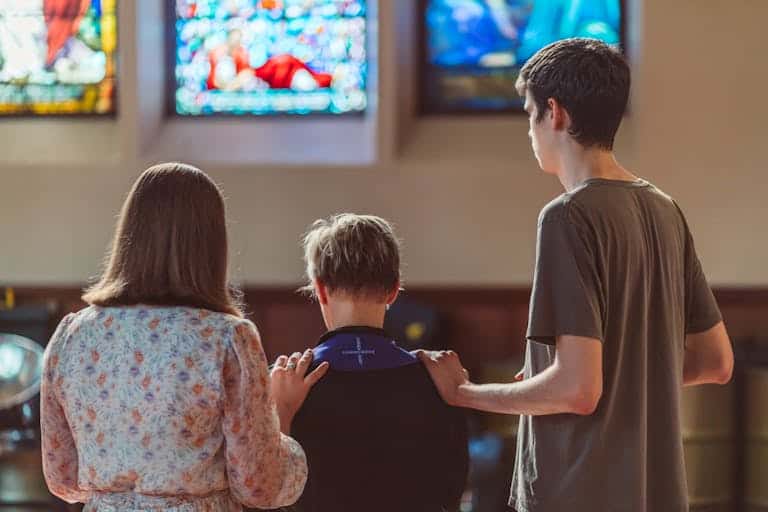

3 Ways Family Pastors Are Trying to Equip Parents
When I began my doctoral research, I wanted to answer a deceptively simple question:
What do family pastors actually do?
Part of my aim was to understand how family pastors in Southern Baptist churches are equipping parents to be the primary disciple-makers of their children.
After interviewing 16 family pastors and analyzing hundreds of pages of transcripts, one theme became unmistakably clear:
Family pastors overwhelmingly see themselves as equippers, not soley program directors or event planners.
Of course, many of the family pastors in the study discussed program initiatives and discipleship strategies to reach parents, students, and kids. However, they stated that their primary role is to minister to the whole family and to equip parents to disciple their own children specifically.
Tons of blog posts and books on family discipleship and Next Gen ministry use the language of “equipping parents.” It has been a buzz phrase for almost two decades now, and for good biblical reasons, I might add. But I wanted to know: “How do practitioners really do it?” What does equipping parents actually look like day to day for these 16 family pastors?
Three consistent approaches emerged from the participant data in my research: Resourcing, Educating, and Relationships. Let’s briefly discuss each one below.
1. Equipping by Resourcing
The most common strategy I coded in my research was what I labeled “Equipping by Resourcing.”
Family pastors are providing:
- Weekly discussion guides tied to Sunday sermons and small group curriculum
- Family devotionals
- Parent emails with conversation starters
- Technology and social media guides
- Milestone toolkits
- Discipleship roadmaps from birth to graduation
One pastor explained:
“If I can put something simple in their hands every week, that is a win” (Family Pastor 4).
Family Pastor 9 said that parents understand that they need to disciple their kids and often tell him, “I don’t know where to start.”
The strategy is practical and accessible: give parents relevant tools they can use immediately. Some participants described developing their own in-house resources and having a dedicated space in their church where parents stop by and pick up printables and books.
Other pastors mentioned that they developed a page on their church’s website dedicated to sharing specific links to blog posts, helpful podcast episodes, videos, and other resources available for purchase online.
Resourcing parents with the right tools seemed to be a significant approach that the participants used. However, while resources are helpful, several participants made a key distinction between “resourcing” and “equipping,” arguing that equipping is more than content delivery; it involves action that results from parental confidence.
“The equipping piece is more than resourcing. Resourcing is sending a link in an email. Equipping is helping them feel confident. It is trying to change the mind on something and put action to it. You have put me in a position to actually do what you are encouraging and teaching me that I am supposed to do” (Family Pastor 8).
Another participant said:
“Parents do not need more things to attend; they need confidence” (Family Pastor 13).
The confidence piece that Family Pastors 8 and 13 articulated also feeds into the following two approaches I found in the study: Educating and Relationships.
2. Equipping by Educating
The second approach I identified in the research data was “Equipping by Educating.”
Instead of solely giving parents tools, family pastors are teaching them how to use the resources they suggest, while also casting a biblical vision for family discipleship.
Some examples included:
- Parenting workshops
- Family discipleship conferences
- Parent commissioning services
- Gospel-centered milestone events
- Quarterly training gatherings
Education clarifies the mission and vision. Clarity builds confidence. Confidence fuels obedience.
In many churches, family pastors are creating intentional discipleship pathways that help parents see what spiritual leadership looks like at each developmental stage. They are using short-term programs and classes to cast the vision and educate parents, grandparents, and guardians on how to disciple the next generation.
The shift is subtle but significant. The question is no longer: “How do we get families to attend more?” It becomes: “How do we capitalize the time we have to encourage and train families to disciple more every day?”
3. Equipping Through Relationships
Equipping through relationships was the dominant theme across nearly every interview. The most effective equipping was relational. One family pastor told me:
“Equipping happens in coffee shops more than classrooms” (Family Pastor 2).
Another said:
“You cannot hand someone a PDF and expect transformation. They need someone walking with them” (Family Pastor 11).
Equipping, in practice, often looks like:
- Coffee with an overwhelmed dad
- A hallway conversation that becomes discipleship
- A small group where parents confess struggles
- A mentoring relationship that builds trust over time
The data showed something important: relational trust precedes spiritual influence.
When parents trust their family pastor, they are more likely to:
- Learn and receive advice
- Ask for help
- Confess parenting struggles
- Attempt new discipleship rhythms
- Share the gospel with their kids
This relational emphasis also mirrors patterns I explored in past presentations, such as “Building a Future-Ready Kids Ministry.“
My lead pastor has said this on many occasions in staff meetings, and I agree: “Church attendance/frequency does not always equate to life change and spiritual growth. It can help, but they are not the same thing.”
Jesus spent time with those he discipled. He was highly relational. Both Old and New Testament Scriptures demonstrate a pattern of mentoring relationships between a teacher/mentor and his student, disciple, or protégé.
Programs have their place; they inform and educate. They communicate the vision.
However, it’s relationships that cultivate life transformation and biblical community.

What This Means for Churches
If I could summarize my findings in one sentence, it would be this:
Family pastors are trying to bridge the church and the home through relational equipping.
They are not attempting to replace parents. They are trying to:
- Resource them
- Educate them
- Walk with them
This is not always a flashy ministry or event.
It is slow.
It is relational.
It is pastoral.
It reflects what I described before as one of the pastoral theological identities of a family pastor, and any pastor for that matter: a Shepherd-Equipper.
That identity changes how success is measured. Instead of asking: “How many attended?”
Some pastors are beginning to ask:
- “How many parents had a gospel conversation this week?”
- “How many dads have I reached out to this week?”
- “Which parent needs me to stop in the hallway and pray for their family this Sunday?”
This shift in our mindset changes everything.
A Final Encouragement
If you are a family pastor, kids pastor, associate pastor, lead pastor, or anything in between, let me encourage you:
Strong, intentional programming matters. But if we neglect equipping parents, we unintentionally train families to outsource discipleship.
The church was never meant to replace the home. It was designed to equip the saints for the work of ministry (Eph 4:12). The “saints” include parents, kids, teens, grandparents, stepdads, and all who are among the family of God.
Pray for the families you serve this week. Communicate a biblical vision for family discipleship at every program and opportunity you can. Provide them with tools to help them grow in their faith and responsibilities. Be present with people. Walk with them; cry with them. Be faithful and available.